Digital Marketing 13 min read
What Is Digital Marketing? A Simple Guide to How Online Marketing Works
Digital marketing refers to promoting products or services through online channels like search engines, websites, social media, email, and digital ads. It helps businesses reach the right audience, build awareness, and generate measurable results with smart strategies and real-time data.
SD
Shubham Dholke
December 2, 2025
Share:

Understanding Digital Marketing: A Comprehensive Guide
Introduction to Digital Marketing
Digital marketing encompasses all marketing efforts that utilize the internet or electronic devices to connect with consumers. In today’s digital era, the significance of digital marketing has surged, as more individuals and businesses engage with online platforms. Unlike traditional marketing methods, which often rely on print, radio, or television advertisements, digital marketing leverages digital channels such as social media, email, search engines, and websites to promote products and services. This shift in focus has transformed how organizations approach customer engagement and expansion strategies.
One of the defining features of digital marketing is its ability to track and analyze campaign performance in real time. Businesses can measure the effectiveness of their marketing strategies through various metrics, such as website traffic, conversion rates, and engagement levels. This data-driven approach allows companies to refine their techniques continuously, ensuring they reach their target audience more effectively. Furthermore, digital marketing offers cost advantages, often providing a higher return on investment compared to traditional marketing methods.
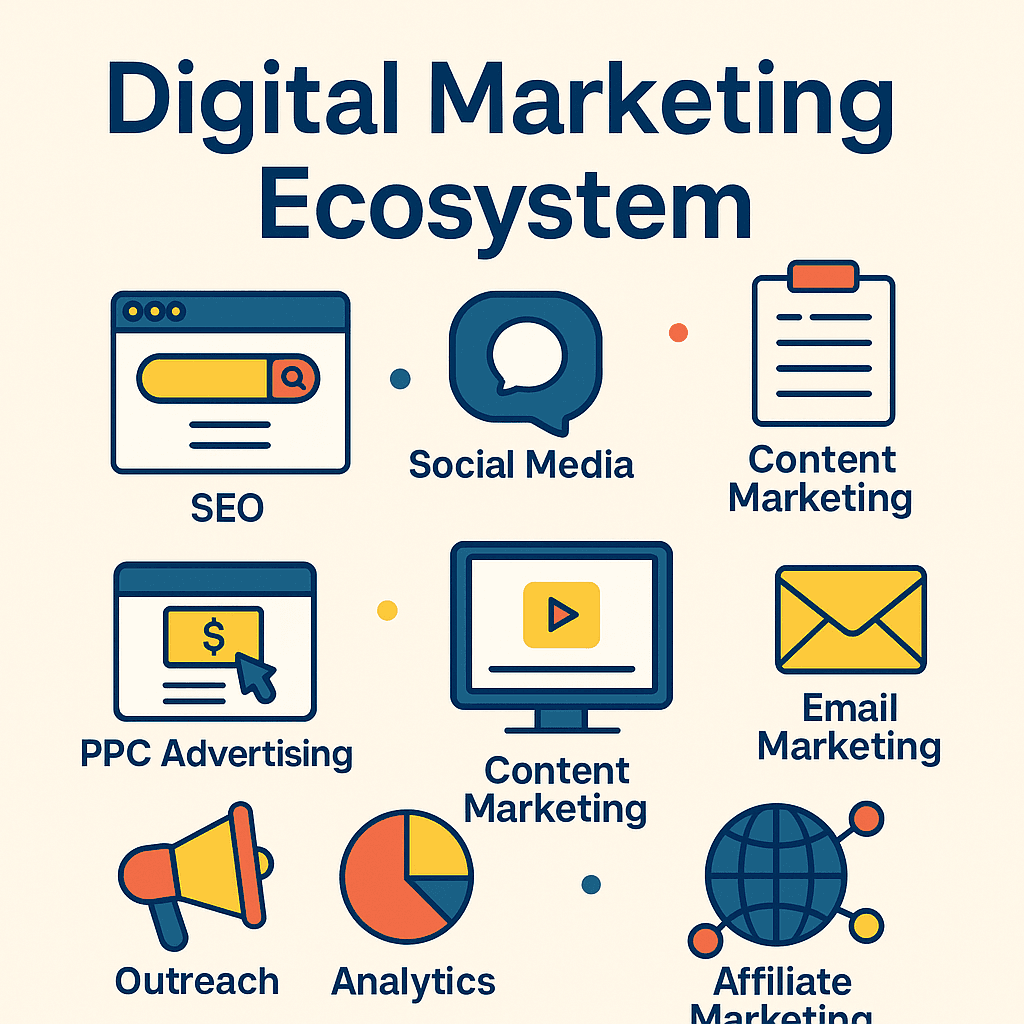
Digital marketing is comprised of several key components including search engine optimization (SEO), content marketing, social media marketing, pay-per-click (PPC) advertising, email marketing, and influencer marketing, among others. Each component plays a distinct role in an overall digital marketing strategy, working synergistically to enhance visibility, drive traffic, and convert leads into customers. The ability to tailor campaigns to specific demographics and track engagement creates a personalized experience for customers, fostering loyalty and repeat business.
In this comprehensive guide, we will delve deeper into the facets of digital marketing, allowing businesses and marketers to navigate this ever-evolving landscape. Understanding the nuances of digital marketing is essential for anyone looking to thrive in modern commerce, making it a pivotal component for business success.
The Evolution of Marketing: From Traditional to Digital
The landscape of marketing has undergone a remarkable transformation over the decades, shifting from traditional methods to the dynamic realm of digital marketing. Historically, marketing strategies encompassed tactics such as print advertising, radio, television, and direct mail. These conventional approaches relied heavily on mass communication and one-way messaging, where companies disseminated information to consumers without direct interaction. The primary objective was to build brand awareness and influence purchasing decisions through exposure.
The drive toward digital marketing was further accelerated by the widespread use of smartphones and mobile devices. Consumers increasingly sought information and shopping opportunities at their fingertips, prompting businesses to adapt their strategies to a more mobile-friendly format. This shift also fostered an environment where engagement became paramount, as brands sought to cultivate relationships with their audience through interactive content, user-generated advertising, and social media engagement.
Factors behind the transition to digital marketing include the need for measurable results, cost-effectiveness, and the rapidly changing consumer behavior landscape. As businesses recognized the potential of digital channels to generate real-time feedback and analytics, traditional marketing methods faded into the background. Consequently, the marketing industry has not only evolved in its strategies but also embraced a culture of continuous adaptation to ever-shifting technological advancements.
Key Components of Digital Marketing
Digital marketing encompasses a broad spectrum of strategies designed to connect businesses with their target audiences through various online channels. Among the core components of digital marketing are search engine optimization (SEO), content marketing, social media marketing, email marketing, and pay-per-click (PPC) advertising. Each of these elements plays a crucial role in enhancing online visibility and engagement.
Search engine optimization (SEO) is the practice of optimizing a website to improve its ranking on search engine results pages. Effective SEO strategies involve keyword research, on-page optimization, and link building. A well-optimized website attracts organic traffic, which is vital for long-term sustainability. Integrating SEO best practices ensures that content reaches the appropriate audience, thereby increasing brand awareness and generating leads.
Content marketing revolves around creating valuable and relevant content aimed at attracting and retaining a clearly-defined audience. It includes blog posts, articles, videos, infographics, and podcasts, all designed to provide informative and engaging material. High-quality content not only boosts customer engagement but also drives traffic to websites by fulfilling user needs and enhancing brand credibility.
Social media marketing utilizes platforms such as Facebook, Twitter, Instagram, and LinkedIn to promote products and services. Businesses create strategic campaigns to engage with their audience, build brand loyalty, and drive traffic to their websites. Social media serves as a powerful tool for direct interaction, enabling real-time feedback and fostering community around brands.
Email marketing remains a fundamental digital marketing component that provides personalized communication with potential and existing customers. By sending targeted emails with tailored content, businesses can nurture relationships and guide prospects through the sales funnel. With proper segmentation and analytics, email campaigns can deliver high conversion rates and effectively promote products or services.
Lastly, pay-per-click (PPC) advertising allows businesses to target their audience through paid ads across various platforms, including search engines and social media. Advertisers only pay when users click on the ad, making it a cost-effective strategy for gaining quick visibility. When executed correctly, PPC campaigns can yield immediate results and drive traffic, enhancing overall marketing efforts.
The Role of Social Media in Digital Marketing
Social media has become an integral component of digital marketing strategies for businesses across various industries. As platforms such as Facebook, Twitter, Instagram, and LinkedIn continue to grow in user base and influence, the role they play in brand promotion and customer interaction is increasingly significant. Companies leverage social media to boost brand awareness, engage with consumers, and ultimately drive lead generation.
One of the primary advantages of social media in digital marketing is its unparalleled ability to reach a large audience quickly. With billions of active users worldwide, social media platforms provide businesses with an unprecedented opportunity to showcase their products and services. By creating and sharing engaging content, brands can capture the attention of potential customers, prompting them to develop an interest in their offerings. Through targeted advertising and promotional campaigns, companies can ensure that their message reaches specific demographics that align with their ideal customer profiles.
Customer engagement is another critical aspect of digital marketing facilitated by social media. Businesses can interact directly with their audience, responding to inquiries, addressing concerns, and gathering feedback. This two-way communication fosters a sense of community around the brand, encouraging loyalty and trust among consumers. Furthermore, companies can utilize social media analytics to gain insights into customer preferences and behaviors, allowing them to tailor their marketing efforts for better results.
Lastly, social media plays a crucial role in lead generation by driving traffic to business websites. By including links in social media posts and encouraging users to visit their website, brands can convert social interactions into actionable leads. Well-executed social media marketing campaigns have the potential to not only enhance brand visibility but also significantly impact sales and revenue. Overall, integrating social media into digital marketing strategies enables businesses to maximize their reach and effectiveness in today's dynamic marketplace.
Content Marketing: Creating Value through Digital Content
Content marketing is a strategic approach aimed at creating and distributing valuable, relevant, and consistent content to attract and retain a clearly defined audience. Its primary purpose is to drive profitable customer action by providing information that benefits the consumer. By focusing on delivering high-quality content, businesses can build trust and establish themselves as thought leaders within their industry.
There are several key types of content that marketers utilize to engage their audience effectively. Blogs remain a foundational aspect of content marketing, offering companies a platform to share insights, tips, and stories. A well-written blog can improve SEO rankings and enhance brand visibility. Videos have also gained tremendous traction; they not only serve as an engaging mode of communication but also cater to varying consumer preferences for content consumption. Additionally, infographics combine visual elements with informative data, making complex information easier to digest and share across social media platforms.
Creating value through content is essential for successful content marketing. This entails understanding the needs and preferences of the target audience and tailoring the content accordingly. Effective content should educate, entertain, or inspire the audience, ensuring that it resonates with their experiences and challenges. Utilizing keyword optimization strategically throughout the content can enhance its discoverability, making it easier for potential customers to find relevant solutions.
Best practices for content creation include consistency in posting schedules, ensuring that content is well-researched and fact-checked, and utilizing a clear and concise writing style. Additionally, engaging visuals and effective calls to action can significantly enhance user experience and encourage interaction. Ultimately, by adhering to these principles, businesses can foster a loyal audience that values the insights and solutions provided through their digital content efforts.
Search Engine Optimization (SEO): Boosting Online Visibility
Search Engine Optimization, or SEO, is a critical digital marketing strategy that focuses on enhancing a website's visibility on search engines such as Google, Bing, and Yahoo. The core objective of SEO is to increase organic traffic to a website by ensuring that it ranks higher in search engine results pages (SERPs). With the growing reliance on the internet for information and services, businesses of all sizes need to implement effective SEO strategies to connect with potential customers.
One of the primary components of SEO is comprehensive keyword research. This process involves identifying the search terms that potential customers use when looking for products or services related to a business. By incorporating these keywords strategically throughout the website’s content, organizations can improve their chances of appearing in relevant searches. Moreover, utilizing synonyms and related phrases not only enhances the content's readability but also aligns with search engine algorithms that value context.
Another crucial aspect of SEO is on-page optimization, which includes optimizing individual web pages to improve their ranking in search results. This encompasses a variety of factors such as optimizing title tags, header tags, and meta descriptions. Additionally, ensuring that the website is mobile-friendly, fast-loading, and secure significantly contributes to better user experience and higher rankings.
Off-page SEO complements on-page efforts by focusing on external factors that influence rankings. Building a robust backlink profile, which involves obtaining links from reputable sites, is vital for boosting authority and trustworthiness in the eyes of search engines. As search engines evolve, so do their algorithms. Staying informed about algorithm updates is essential for businesses to maintain and enhance their online visibility effectively.
By understanding and implementing these key SEO tactics, businesses can significantly enhance their online presence and drive targeted traffic, which ultimately leads to increased conversions and growth in today's digital landscape.
Email Marketing: Connecting with Your Audience
Email marketing remains a vital component of digital marketing strategies, adeptly facilitating connections with audiences. By deploying targeted email campaigns, businesses can cultivate lasting relationships with their customers while effectively nurturing leads. Success in email marketing hinges on a series of strategic actions aimed at enhancing engagement and retention rates.
One of the foundational steps in establishing a successful email marketing initiative involves building a robust email list. This can be achieved using various methods, such as encouraging website visitors to sign up for newsletters, offering exclusive promotions, or utilizing social media platforms. To ensure a sincere subscription process, emphasize the value subscribers will gain, such as insights on products or special discounts. Additionally, maintaining a clean and updated email list is crucial for optimizing deliverability and reducing bounce rates.
Crafting compelling email campaigns is another highlight of successful email marketing. Messages should be tailored to resonate with the target audience, employing personalized content that speaks to individual preferences. Elements such as engaging subject lines and visually appealing layouts can significantly increase open rates and drive conversions. Moreover, incorporating enticing calls-to-action (CTAs) will encourage users to take the desired steps, whether it is making a purchase or exploring additional content.
Lastly, measuring the success of email marketing efforts through analytics is essential for ongoing improvement. Businesses should regularly review key performance indicators (KPIs), including open rates, click-through rates, and conversion rates. By analyzing this data, marketers can optimize future campaigns, keeping their audience engaged and ensuring that their strategies remain effective. This cyclical process helps to create a dynamic approach, allowing companies to adapt to the evolving preferences of their audience.
The Importance of Data Analytics in Digital Marketing
Data analytics has emerged as a pivotal component in the realm of digital marketing, enabling businesses to tailor their strategies and enhance their marketing effectiveness. At its core, data analytics encompasses the systematic computational analysis of data to gain insights and inform decision-making processes. Marketers collect various types of data, including consumer behavior, website traffic, social media interactions, and email performance metrics. This wealth of information provides a comprehensive view of the audience, allowing marketers to understand patterns and preferences that shape their strategies.
One of the critical aspects of data analytics is the ability to segment audiences based on specific characteristics such as demographics, interests, and purchasing behavior. By analyzing these segments, marketers can create targeted campaigns that resonate with particular groups, thereby increasing the likelihood of engagement and conversion. Furthermore, the use of analytics tools allows for real-time monitoring of campaign performance, enabling marketers to adjust their approaches swiftly. For instance, if a particular advertisement is underperforming, data analytics can help identify the issue and prompt changes in strategy to optimize results.
In addition to improving campaign effectiveness, data-driven decisions contribute to better resource allocation. By understanding which channels yield the highest return on investment, marketers can prioritize their efforts and budgets accordingly. This strategic approach not only enhances overall campaign success but also leads to more efficient use of resources. The integration of data analytics into digital marketing practices has become indispensable, as it empowers marketers to make informed decisions based on solid evidence rather than intuition alone.
In conclusion, the vital role of data analytics in digital marketing cannot be overstated. It empowers marketers to gather insights, optimize strategies, and achieve measurable results, ultimately driving business success in an increasingly competitive digital landscape.
Conclusion: The Future of Digital Marketing
In summary, the landscape of digital marketing is continuously evolving, shaped by technological advancements and changing consumer behaviors. The insights discussed throughout this guide highlight the importance of adaptability in marketing strategies. As we observe rapid developments in artificial intelligence, machine learning, and data analytics, businesses are now better equipped to tailor their marketing efforts to meet specific consumer needs. These technologies not only enhance customer engagement but also optimize decision-making processes.
Furthermore, the shift towards mobile consumption and the rise of social media have dramatically influenced digital marketing practices. As more consumers utilize mobile devices for purchasing decisions, marketers must prioritize mobile-friendly content and advertising strategies to capture and retain attention. This trend underscores the necessity for continuous innovation to engage an increasingly discerning audience.
We are also witnessing a growing emphasis on personalization within digital marketing. As consumers become more accustomed to customized experiences, companies must leverage data to deliver relevant content and targeted advertisements. This trend is poised to reshape creative strategies, encouraging brands to establish deeper connections with their audience.
Emerging platforms and technologies will pave the way for new opportunities in the digital marketing arena. For instance, the advent of voice search is already challenging traditional SEO strategies, prompting marketers to rethink their optimization approaches to remain visible in a voice-dominated world. Additionally, the integration of virtual and augmented reality in marketing campaigns presents an innovative frontier for enhancing consumer experiences.
As we look toward the future, it is evident that digital marketing will become increasingly intricate and data-driven. Organizations that embrace these changes and invest in technology and consumer understanding will likely thrive in this dynamic environment. Staying ahead of emerging trends will be crucial for success, ensuring that businesses continue to effectively engage with their audiences in meaningful ways.