CTV Measurement : What is CTV Marketing?
Connected TV (CTV) advertising represents the revolutionary convergence of television's impact with digital marketing's precision. This comprehensive guide explores what CTV is, how it differs from traditional television marketing, and why it's becoming essential for modern advertisers. Learn about CTV buying strategies, advanced audience targeting capabilities, and sophisticated measurement frameworks that deliver real ROI. Whether you're new to digital TV advertising or looking to optimize existing campaigns, this guide provides actionable insights into the platforms, creative formats, and trends shaping the future of big-screen marketing in 2025 and beyond.
The Complete Guide to Connected TV (CTV) Advertising in 2025: Strategy, Trends, and ROI
Introduction: The Big Screen Goes Digital
The television screen in the living room is undergoing a profound transformation. The days of passive, scheduled viewing are fading, replaced by an on-demand, interactive, and internet-connected future. This revolution is not just changing how we watch—it’s fundamentally reshaping how brands communicate. Connected TV advertising, or CTV marketing, has emerged as the dominant force, merging the unmatched impact of the big screen with the precision, measurability, and accountability of digital marketing.
By 2025, streaming represents 43.8% of overall TV time in the U.S., a significant 10-point increase in just two years. This seismic shift is mirrored in advertising budgets: a substantial 56% of global marketers plan to increase their spending on over-the-top (OTT)/CTV advertising. This guide will serve as your definitive roadmap, demystifying what CTV is, exploring its immense benefits, unpacking the mechanics of CTV buying, and providing actionable insights to launch and scale your own high-performing campaigns.
What is CTV? Demystifying the Core Concepts
At its core, what does CTV mean? Connected TV (CTV) refers to any television set that can stream video content via an internet connection, either through a built-in smart TV interface or an external streaming device. Unlike traditional broadcast or cable TV (linear TV), CTV supports app-based, on-demand viewing with the ability to insert dynamic, programmatic advertisements.
It’s crucial to distinguish CTV from related terms like OTT:
CTV (Connected TV): The device. This is the hardware—your smart TV, Roku, Amazon Fire Stick, Apple TV, or gaming console.
OTT (Over-the-Top): The content delivery method. This refers to video delivered over the internet, bypassing traditional cable, regardless of the device (e.g., watching Netflix on a tablet is OTT but not CTV).
Linear TV: Traditional scheduled programming delivered via broadcast, cable, or satellite.
The power of CTV advertising lies in this hybrid nature. It brings together television’s premium, high-attention environment with digital advertising’s targeting and measurement capabilities, creating what many call performance TV or digital TV advertising.
The CTV Ecosystem: Devices, Platforms, and Inventory
Understanding the CTV channel platform landscape is essential for effective planning. The ecosystem consists of three key components:
1. Connected TV Devices
These are the gateways to streaming content in the living room:
Smart TVs: Sets with built-in streaming platforms (e.g., Samsung Tizen, LG webOS, Vizio SmartCast).
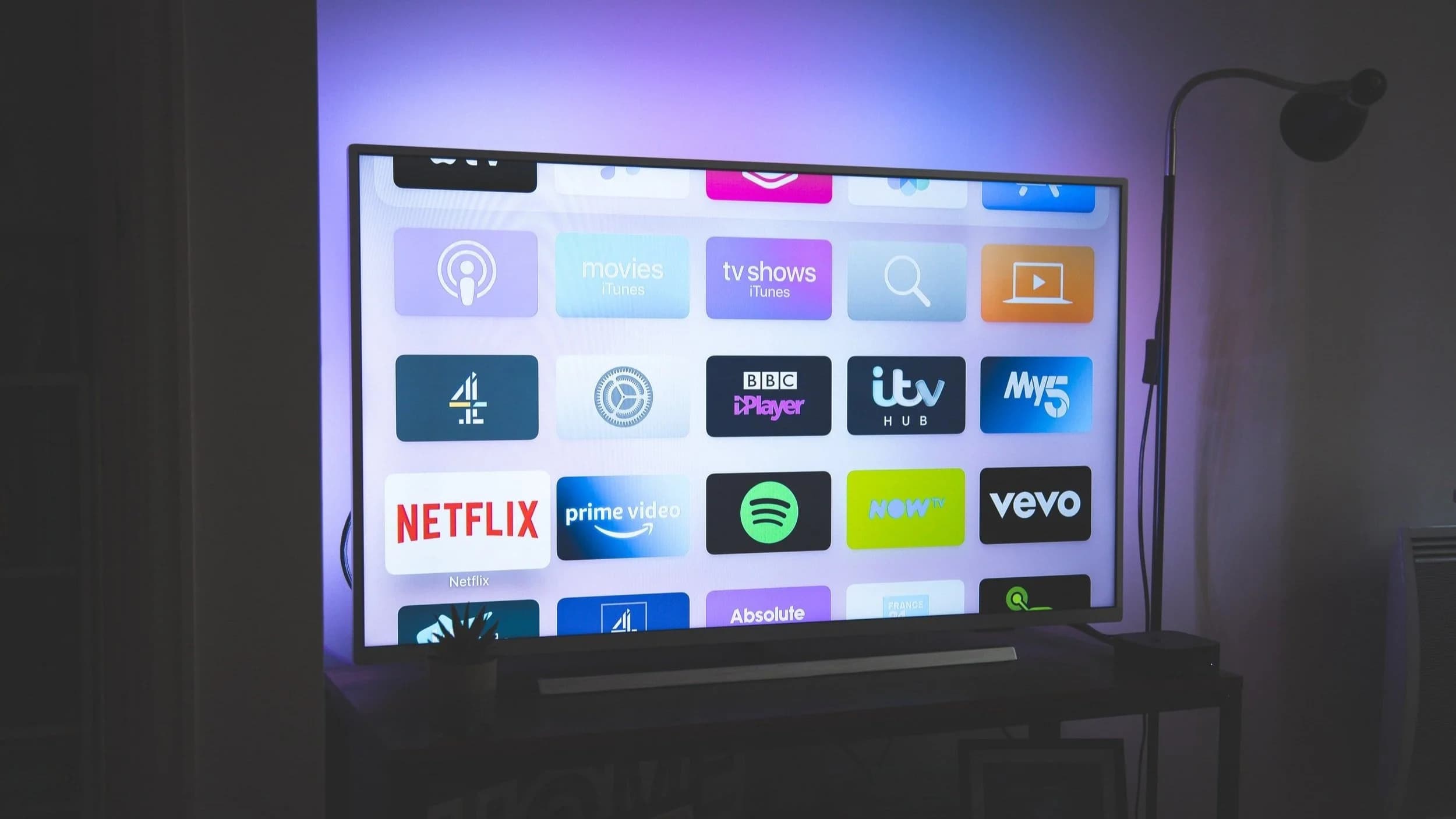
Streaming Devices: HDMI-connected players like Roku, Amazon Fire TV, Google Chromecast, and Apple TV.
Gaming Consoles: PlayStation and Xbox, which double as entertainment hubs.
Set-Top Boxes: IP-based boxes from cable providers that support streaming apps.
2. CTV Inventory & Platforms
CTV inventory refers to the ad slots available within streaming apps and services. This inventory is accessed through various platforms:
Demand-Side Platforms (DSPs): Software like The Trade Desk, Amazon DSP, and Google DV360 that allow advertisers to buy CTV ads programmatically across multiple publishers.
Ad-Supported Streaming Services: These include Free Ad-Supported Streaming TV (FAST) channels like Pluto TV and Tubi, ad-supported tiers of subscription services like Hulu, Netflix, and Disney+, and platforms like YouTube on TV.
3. CTV Ad Formats
TV ads examples in the CTV world are evolving beyond the standard 30-second spot:
Pre-roll, Mid-roll, and Post-roll: Video ads that play before, during, or after content.
Interactive Ads: Formats that allow viewers to engage using their remote (e.g., polling, quizzes).
Shoppable Ads & QR Codes: Ads that include scannable codes or direct links to drive immediate action.
Pause Ads: Creative that appears when a viewer pauses their content.
Why Advertise on CTV? The Unmatched Benefits
The migration of ad budgets to connected TV advertising is driven by tangible advantages that solve traditional TV’s biggest pain points.
| Benefit | Traditional Linear TV | Connected TV (CTV) |
|---|---|---|
| Targeting | Broad demographics (age/gender) | Precise audience targeting (behavior, interests, location, CRM) |
| Measurement | Estimated ratings, limited attribution | Real-time CTV measurement (viewability, completion, conversions, ROAS) |
| Cost & Flexibility | High upfront commitments, rigid schedules | Lower entry points, flexible CTV media buying, real-time optimization |
| Ad Experience | Scheduled, same for all viewers | Dynamic, can be personalized and interactive |
| Wasted Spend | High (paying for broad, uninterested audiences) | Low (precision targeting reduces waste) |
A 2025 report based on $2 billion in ad spend found that CTV generated 10x more conversions than linear TV, despite using just 60% of the media budget. This performance shift is why brands now view CTV not just as a brand-awareness tool, but as a core performance marketing channel.
The 2025 CTV Landscape: Key Trends You Can't Ignore
Staying ahead requires understanding the connected TV trends shaping the industry in 2025 and beyond.
1. The "Brandformance" Revolution
The line between brand building and performance marketing is blurring. The Brandformance TV approach combines the emotional storytelling of brand campaigns with the data-driven, outcome-focused tactics of performance marketing. Advertisers are demanding—and getting—campaigns that drive both top-of-funnel awareness and bottom-funnel conversions.
2. AI-Powered Everything
Artificial intelligence is revolutionizing CTV marketing, from ad creation to optimization. AI tools can now generate high-quality video creative from text prompts, making premium ad production accessible to smaller brands. Furthermore, AI-driven analytics provide granular audience insights and enable real-time campaign adjustments for maximum efficiency.
3. The Rise of Retail Media on CTV
The convergence of streaming and e-commerce is creating powerful new opportunities. Platforms are integrating shoppable ad formats, and first-party purchase data from retailers is being used to target high-intent audiences on the big screen, creating a closed-loop from ad exposure to sale.
4. Advanced Targeting and Privacy
With the deprecation of third-party cookies, CTV advertising is leaning into privacy-first targeting solutions. This includes the use of first-party data, contextual targeting, and clean room technologies that allow for secure data collaboration without exposing personal information.
5. Programmatic Dominance
An estimated 75% of all connected TV advertising transactions now occur programmatically. This automation makes CTV buying more efficient, transparent, and scalable, allowing advertisers to access premium inventory across countless streaming apps through a single platform.
How to Buy CTV Ads: A Guide to CTV Media Buying
Navigating CTV media buying can seem complex, but it boils down to a few primary avenues.
1. Programmatic Buying (Via DSPs)
This is the most common and scalable method. Advertisers use a Demand-Side Platform (DSP) to set their targeting parameters, budget, and bids. The platform then automatically buys inventory in real-time auctions across a vast network of CTV channel platforms. This approach offers unparalleled efficiency, reach, and data-driven optimization.
2. Direct Buys
For guaranteed placement on specific, premium content (e.g., a major live sports event on a streaming service), advertisers can buy inventory directly from the publisher. This often comes at a higher price but ensures brand safety and prominent placement.
3. Managed Service Partners
Many brands work with specialized agencies or CTV advertising platforms that offer managed services. These partners handle the entire process—from strategy and CTV buying to optimization and CTV measurement—leveraging their expertise and established publisher relationships.
Top CTV Ad Platforms in 2025 Include: The Trade Desk, Amazon DSP, Google DV360, Magnite, and PubMatic, among others.
Precision at Scale: Audience Targeting in CTV Ads
The era of blasting ads to a vague demographic is over. Audience targeting in TV ads reaches its pinnacle with CTV. Advertisers can move beyond basic age and gender to target based on:
Demographics & Life Stage: Parents, retirees, college students.
Behavioral & Interest Data: Based on viewing history, app usage, and online behavior.
Geographic Targeting: Down to specific zip codes or even neighborhoods.
CRM & First-Party Data Retargeting: Reach your own customers or website visitors on the big screen.
Contextual Targeting: Serve ads during relevant content genres, like sports or cooking shows.
This precision ensures your ad spend targets viewers most likely to be interested in your product, dramatically reducing waste and improving ROI. Campaigns using audience-first targeting on CTV have been shown to deliver 3x more efficient reach than linear TV alone.
Proving Your Impact: CTV Measurement and Attribution
The question, "Did it work?" has a clear answer in CTV. CTV measurement provides digital-grade analytics that linear TV could never offer.
Essential CTV Metrics to Track:
Completion Rate: The percentage of viewers who watch your ad in full. CTV rates often exceed 90% due to the engaged, unskippable environment.
Cost Per Acquisition (CPA): The cost to generate a desired action (sale, lead, etc.).
Return on Ad Spend (ROAS): Revenue generated for every dollar spent. CTV’s average ROAS is nearly $6 for every $1 spent, almost three times higher than linear TV.
Incremental Reach: Measures the unique audience added by your CTV campaign beyond what linear TV reached.
View-Through Attribution (VTA): Tracks conversions that occur after a viewer sees your CTV ad, even if they don’t click immediately, capturing the full-funnel influence.
Creative That Converts: CTV Ad Best Practices
Great targeting is wasted without great creative. CTV ads example campaigns that win follow these principles:
Front-Load Your Message: Capture attention in the first 5 seconds. Assume viewers can skip (even if they often can’t).
Design for the Big Screen: Use high-resolution footage, bold visuals, and clear, legible text.
Incorporate a Clear Call-to-Action (CTA): Tell viewers what to do next. “Visit our website,” “Scan the QR code,” or “Download the app.”
Leverage Interactive Elements: Use QR codes to bridge the gap between the TV screen and a viewer’s smartphone, turning a passive moment into an active engagement.
Test and Optimize: Continuously A/B test different creatives, CTAs, and lengths to see what resonates best with your target audience.
The Future of CTV: What’s Next After 2025?
The evolution of connected TV advertising shows no signs of slowing. As we look beyond 2025, expect:
Further Fragmentation & Consolidation: More streaming services will emerge, while major players will continue to consolidate inventory and technology.
Hyper-Personalization: Ads will become increasingly tailored to individual households based on real-time data and AI predictions.
Immersive Experiences: The integration of Augmented Reality (AR) and more sophisticated interactive formats will create deeper brand experiences.
Universal Measurement Standards: The industry will move towards more unified metrics and attribution models, simplifying cross-channel campaign analysis.
Conclusion: Your Action Plan for CTV Advertising Success
CTV advertising is no longer a speculative channel; it is a critical component of a modern media mix. It offers a unique convergence of scale, impact, and accountability. To get started:
Define Your Goals: Are you driving brand awareness, website traffic, or direct sales?
Understand Your Audience: Use your first-party data to build target audience profiles.
Start with a Test Budget: Begin with a modest investment on a single platform or with a managed partner to learn and iterate.
Invest in Quality Creative: Your ad must be worthy of the premium living room environment.
Measure Religiously: Set up robust tracking from day one and focus on the metrics that tie directly to your business objectives.
The big screen has gotten smart. It’s time for your advertising strategy to do the same.
Ready to transform your television marketing with the power of data-driven CTV? [Your Company Name] specializes in crafting and executing high-impact connected TV advertising strategies. Contact us today for a free consultation and see how we can help you reach engaged audiences and drive measurable growth. visit to www.adomobi.com
FAQs: Connected TV (CTV) Advertising
1. What is CTV (Connected TV) in simple terms?
CTV definition: A Connected TV (CTV) is any television that can stream video content over the internet, either through built-in "smart" capabilities (a Smart TV) or via an external device like a Roku or Fire Stick. What CTV means in advertising is the ability to deliver targeted, measurable video ads to viewers on these internet-connected television screens.
2. How is CTV advertising different from traditional TV ads?
Traditional television marketing (linear TV) buys broad audience segments (e.g., women 25-54) on scheduled programming. Connected TV advertising is a form of digital TV advertising that uses data for precise audience targeting in TV ads, serves ads dynamically, and provides detailed CTV measurement (like website visits or purchases), offering accountability similar to online campaigns.
3. What does "OTT" mean, and how is it related to CTV?
OTT (Over-The-Top) refers to the method of delivering streaming video content over the internet, bypassing traditional cable. CTV is the primary device on which OTT content is watched. Therefore, while all CTV ads are a type of OTT advertising, not all OTT viewing happens on a TV (e.g., watching on a phone). For TVs advertisement, CTV is the key living-room screen.
4. What are the main benefits of choosing CTV for my advertising?
Advertising on CTV offers three core benefits: 1) Precision Targeting: Move beyond demographics to target based on interests, behaviors, and first-party data. 2) Better Measurement: Track real performance with CTV measurement of view-through rates, website traffic, and conversions. 3) High Engagement: Users choose to stream content, creating a lean-in, high-attention environment with high ad completion rates.
5. How does audience targeting work in CTV ads?
Audience targeting in TV ads via CTV uses data signals (like viewing habits, device graphs, and modeled demographics) to serve ads to specific household segments. For example, you can target "likely luxury auto intenders" or "households that recently visited your website." This makes CTV marketing far more efficient than traditional scatter-shot TVs advertisement.
6. What are common CTV ad formats and examples?
Common CTV ads examples include non-skippable pre-roll (before content), mid-roll (during content), and pause ads. Interactive formats with QR codes are a growing connected TV trend, turning a brand impression into an immediate mobile action. These TV ads examples are more dynamic than traditional linear spots.
7. What is CTV media buying and how does it work?
CTV media buying, or CTV buying, is the process of purchasing ad inventory on streaming platforms. It's primarily done programmatically through Demand-Side Platforms (DSPs), allowing advertisers to use data to automatically buy impressions across a vast network of CTV channel platforms in real-time, making it highly efficient and scalable.
8. Can small businesses afford to advertise on CTV?
Yes. Unlike traditional television marketing which requires huge upfront buys, digital TV advertising via CTV can be accessed with much smaller, flexible budgets through programmatic platforms. This democratizes access, allowing smaller businesses to run targeted Smart TV advertising campaigns in specific geographies or to niche audiences.
9. How do you measure the success of a CTV campaign?
CTV measurement goes far beyond traditional TV ratings. Key metrics include Video Completion Rate (VCR), view-through rate (VTR), and most importantly, performance outcomes like website lift, app installs, or offline sales attribution. This answers "what does CTV mean for my ROI?" with concrete data.
10. What is a CTV channel platform?
A CTV channel platform is either a hardware/operating system (like Roku Channel, Amazon Fire TV, or Samsung TV Plus) or a streaming app/service (like Hulu, YouTube, or Pluto TV) that hosts content and delivers ads to viewers. Buying ads often involves accessing inventory across multiple such platforms.
11. What are the key connected TV trends for 2025?
Major connected TV trends include: the growth of shoppable ads with QR codes, increased adoption of CTV measurement for business outcomes, the rise of free ad-supported streaming TV (FAST), and greater use of AI for audience targeting and creative optimization, a key topic at industry events like CTV Connect 2025.
12. What's the difference between "Smart TV Advertising" and "CTV Advertising"?
Smart TV advertising is a subset of the broader CTV advertising ecosystem. It specifically refers to ads served on televisions with built-in internet capabilities (Samsung, LG, etc.). CTV advertising includes all internet-connected TVs, whether via a smart TV or an external device (Roku, Apple TV, gaming console).
13. How do I get started with a CTV advertising campaign?
To start advertising on CTV: 1) Define your goal (awareness, website traffic, conversions). 2) Identify your target audience using available data. 3) Partner with a DSP or a specialized agency for CTV media buying. 4) Develop vertical video creative tailored for the big screen. 5) Launch, measure performance, and optimize.
14. Where can I see real CTV advertising examples?
You can see OTT advertising examples and CTV ads examples by watching ad-supported tiers on platforms like Hulu, Peacock, Paramount+, or on free services like Pluto TV, Tubi, and The Roku Channel. Notice how some ads now include interactive calls-to-action or feel highly relevant to the content you're watching.
15. Why is CTV considered the future of television marketing?
CTV marketing represents the future because it combines television's unparalleled brand-building power with digital's precision and accountability. As cord-cutting accelerates and viewing shifts to streaming, connected TV advertising is where engaged audiences spend their time, making it essential for any modern television marketing strategy.
16. what is adomobi?
AdoMobi is a digital advertising and performance marketing company that helps brands grow through data-driven ads, SEO, affiliate marketing, and online promotions.