How Dsps Target Audiences
Tired of wasting ad budget on the wrong audience? In today's digital landscape, precision and automation are not just advantages—they are necessities. This ultimate guide dives deep into Demand-Side Platforms (DSPs), the powerful engines behind modern programmatic advertising. You'll learn how DSPs work in milliseconds to buy ad space, how they use data to target customers with laser focus, and why they are essential for advertisers of any size looking to scale efficiently and maximize ROI. Discover how platforms like OffersMeta DSP, powered by AdoMobi, provide the unique data and intelligent automation needed to win in the competitive digital marketplace.
Demand-Side Platforms (DSPs): Mastering Programmatic Advertising in 2026
Executive Summary: Why the Modern Advertiser Can't Afford to Ignore DSPs
In the high-stakes arena of digital marketing, reaching the right consumer at the perfect moment has evolved from an art to a precise science. Amidst this transformation, Demand-Side Platforms (DSPs) have emerged as the central nervous system for data-driven advertising, automating and optimizing media buying at an unprecedented scale. The numbers speak for themselves: the DSP market is projected to skyrocket to $114.51 billion by 2030, underscoring its critical role in the future of marketing.
This comprehensive guide delves beyond the basic definition to explore the intricate mechanics, strategic benefits, and practical applications of DSPs. You’ll learn how this technology connects advertisers to a global universe of ad inventory in milliseconds, enables unparalleled audience precision, and delivers transparent, optimized performance—all from a single interface. We’ll also examine how modern platforms, including OffersMeta DSP Powered by AdoMobi, are leveraging unique data and automation to provide advertisers with a definitive competitive edge.
1. The Fundamentals: Understanding the DSP Ecosystem
1.1 What is a Demand-Side Platform (DSP)?
A Demand-Side Platform is a sophisticated software system that allows advertisers and agencies to purchase digital advertising inventory across thousands of websites, mobile apps, and connected TV (CTV) platforms through a fully automated, programmatic process. Think of it as a high-frequency trading terminal for ad space, where data-driven decisions to buy impressions happen in real time, replacing manual negotiations and insertion orders.
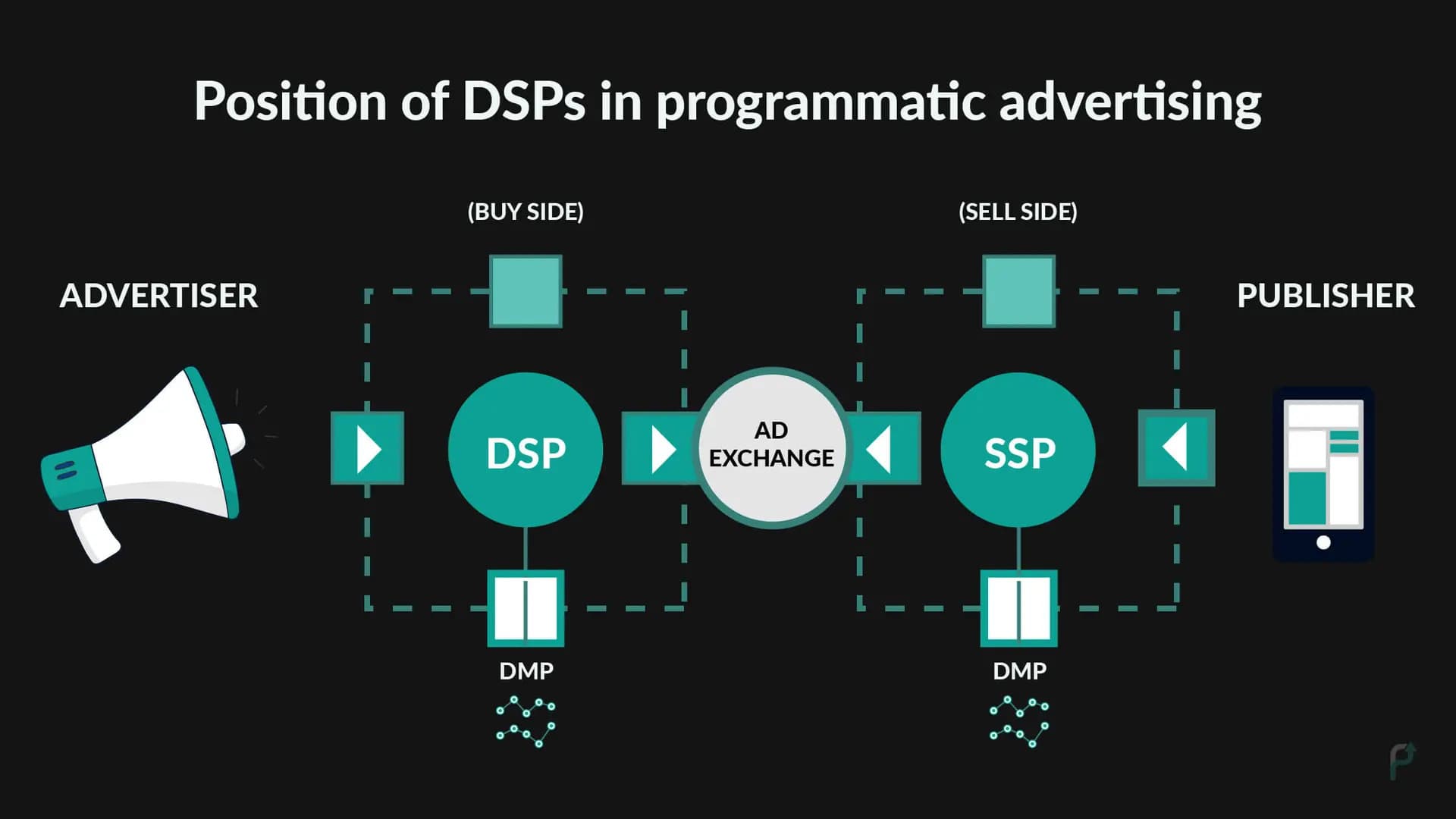
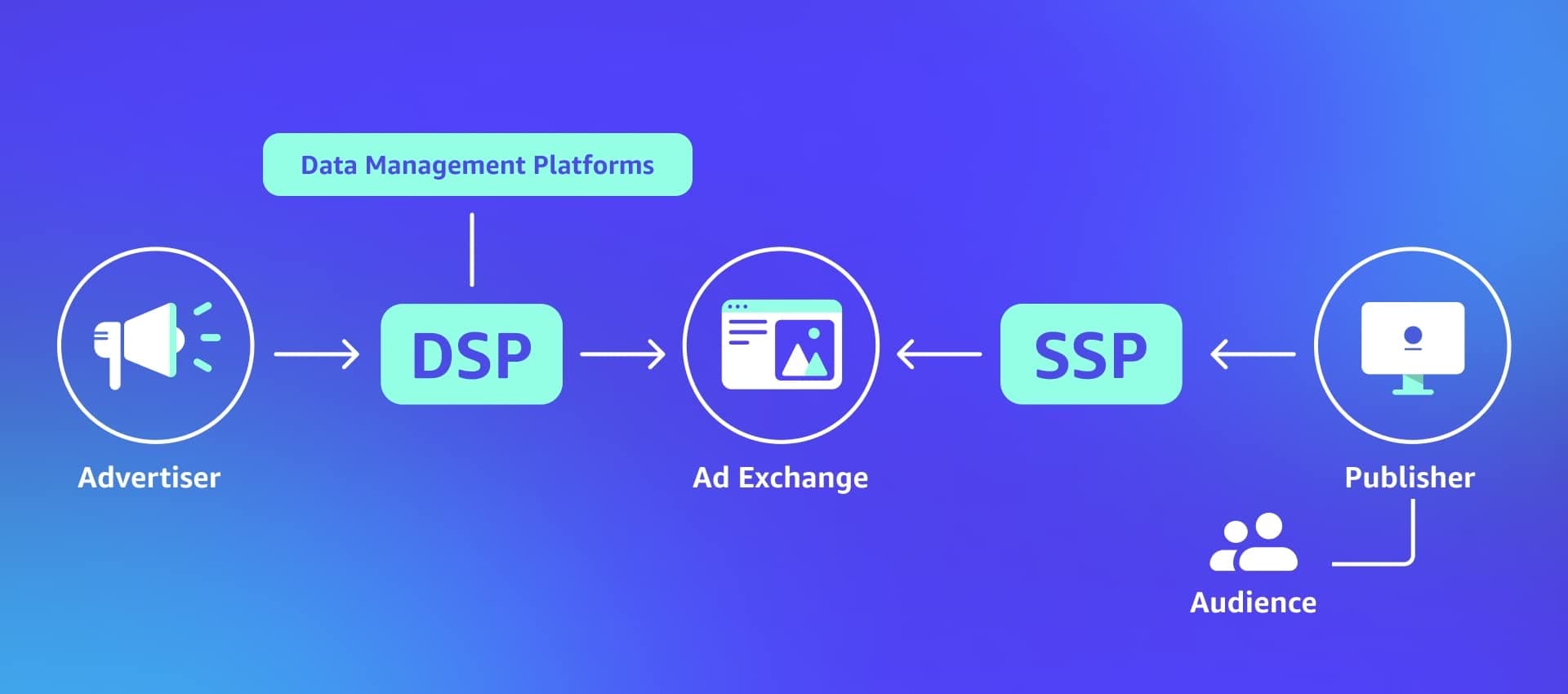
At its core, a DSP serves as the command center for the "demand side" of the digital advertising ecosystem—the advertisers who want to display their messages. It connects to multiple ad exchanges and Supply-Side Platforms (SSPs), which represent the "supply side" (publishers with ad space to sell). This creates a dynamic, efficient marketplace.
1.2 The Evolution: From Manual Buys to Programmatic Power
Traditional digital ad buying was a labor-intensive process involving direct contact with publishers, negotiation of fixed rates, and limited targeting. DSPs revolutionized this by introducing programmatic advertising—the use of software and algorithms to automate the buying, placement, and optimization of media.
This shift was driven by several key needs:
Efficiency: Automating a previously manual process saves immense time and resources.
Scale: Accessing a near-limitless pool of inventory across the open web.
Precision: Moving from contextual site placement to individual audience targeting.
Transparency: Gaining clearer insights into where ads run and how they perform.
Today, programmatic advertising accounts for over 80% of all digital display ad spending in the United States, cementing the DSP's role as an essential tool.
1.3 DSPs vs. Related Platforms: Clearing the Confusion
Navigating the AdTech landscape requires understanding how a DSP interacts with other key platforms:
Supply-Side Platform (SSP): The publisher's counterpart to a DSP. While a DSP helps advertisers buy ad space, an SSP helps publishers sell it. They connect to the same ad exchanges to facilitate transactions.
Ad Exchange: The digital marketplace, or "stock exchange," where ad impressions are auctioned off in real time. DSPs and SSPs connect here to transact.
Ad Network: An older model that aggregates publisher inventory and sells it to advertisers at a marked-up price, often with less transparency. DSPs provide more direct control and often better pricing.
Data Management Platform (DMP): A repository for collecting, organizing, and analyzing audience data from first, second, and third-party sources. A DMP can feed rich audience segments into a DSP to inform smarter bidding.
2. The Mechanics: How a DSP Operates in Milliseconds
The real-time journey of an ad impression, from a user loading a page to an ad displaying, is a breathtaking feat of technology that occurs in under 400 milliseconds.
Here’s a step-by-step breakdown of the Real-Time Bidding (RTB) process:
User Visits a Publisher Site: A consumer loads a webpage or opens a mobile app. The publisher's ad server, often via an SSP, instantly recognizes an available ad impression.
Auction Initiation: Information about the impression (the user's anonymous profile, context of the page, ad size, etc.) is sent to an ad exchange.
Bid Request Broadcast: The ad exchange sends a bid request to multiple connected DSPs, each representing different advertisers.
Algorithmic Evaluation: Each DSP's algorithms analyze the bid request in microseconds. They cross-reference the user data against active campaign targeting parameters (demographics, interests, browsing history, etc.) and calculate the optimal bid price based on the user's perceived value and campaign goals.
Bid Submission: The DSPs that find the user valuable submit their sealed bids back to the exchange.
Auction Resolution: The exchange conducts a lightning-fast auction (often a "second-price" auction), and the winning bid is selected.
Ad Serving: The identity of the winning DSP is sent back to the publisher. The corresponding ad creative is instantly retrieved from an ad server and displayed to the user—all before the page finishes loading.
2.1 Beyond RTB: Types of Programmatic Buys
While RTB on the open exchange is common, DSPs facilitate several transaction types:
Private Marketplace (PMP): An invite-only auction for a publisher's premium inventory. Offers more control and brand safety for advertisers.
Programmatic Guaranteed: A direct, automated deal where an advertiser commits to buying a fixed number of impressions from a specific publisher at an agreed price. It guarantees premium placement.
Preferred Deals: Advertisers get first-look access to purchase premium inventory at a fixed price before it goes to an open auction.
3. Core Features and Benefits: The Strategic Advantages of Using a DSP
Adopting a DSP is not just about automation; it's about unlocking strategic capabilities that drive superior marketing results.
3.1 Unmatched Targeting Precision
DSPs move far beyond simple demographic targeting. They enable multi-layered audience segmentation based on:
Behavioral & Interest-Based: Target users based on browsing history, purchase intent, and content consumption patterns.
Contextual: Place ads on web pages with content relevant to your product.
Geographic & Demographic: Standard targeting by location, age, gender, etc..
Retargeting: Re-engage users who have previously visited your website or app.
Lookalike Modeling: Find new users whose profiles resemble those of your best existing customers.
Platforms with access to unique data sets, like purchase history, have a distinct advantage. For instance, campaigns using Amazon's first-party shopping data have driven 2.5x more product page views and 2.1x more add-to-cart actions.
3.2 Centralized Control and Cross-Channel Reach
A DSP acts as a unified dashboard for managing campaigns across a fragmented digital landscape. Advertisers can buy inventory across:
Display banners on websites
Video ads on streaming platforms and online video
Connected TV (CTV) ads on services like Hulu or Roku
Native advertising within content feeds
Audio ads on streaming music platforms
In-app mobile advertising
This omnichannel approach allows for consistent messaging, unified frequency capping, and holistic performance analysis.
3.3 Data-Driven Optimization and Transparency
DSPs provide real-time analytics and reporting, turning campaign management into a proactive optimization engine.
Performance Tracking: Monitor key metrics like impressions, clicks, conversions, viewability, and return on ad spend (ROAS) in real time.
Budget Pacing: Automatically control daily or campaign-level spend to ensure efficient allocation.
Algorithmic Optimization: Machine learning algorithms can automatically adjust bids, shift budget toward better-performing audiences or creatives, and pause underperforming placements.
3.4 Enhanced Efficiency and Cost-Effectiveness
By automating manual processes, DSPs drastically reduce the operational overhead of media buying. The real-time auction model also promotes market efficiency, as you pay a fair price for each impression based on real-time demand. Furthermore, by minimizing wasted impressions on irrelevant audiences, DSPs improve overall Return on Advertising Spend (ROAS).
4. Who Needs a DSP? Use Cases for Every Advertiser
The versatility of DSP technology makes it valuable for a wide spectrum of advertisers
| Advertiser Type | Primary Needs | How a DSP Delivers Value |
|---|---|---|
| Brands & Enterprises | Brand awareness, large-scale reach, sophisticated attribution, cross-channel strategy. | Manages multi-million dollar budgets across channels, provides brand safety controls, and enables advanced attribution modeling. |
| Performance Marketers & E-commerce | Direct response, sales, conversions, lead generation, and low customer acquisition cost (CAC). | Leverages granular retargeting and lookalike audiences, optimizes in real-time toward conversion events, and maximizes ROAS. |
| Small & Medium Businesses (SMBs) | Cost-effective reach, competing with larger players, and focused local or niche targeting. | Democratizes access to premium inventory, offers scalable budgets, and provides professional-grade targeting tools. |
| Advertising Agencies | Managing multiple client campaigns, demonstrating ROI, and operational efficiency. | Single platform for all clients, streamlined workflow, transparent reporting to prove value. |